Permits · Driveways
Driveway Approach & Encroachment Permits in Reno, Sparks, and Washoe County
The permit most Reno and Sparks homeowners find out about too late isn't the building permit — it's the encroachment (right-of-way) permit. The moment a new, widened, or relocated driveway touches the public street, curb, gutter, or sidewalk, the City of Reno, the City of Sparks, and Washoe County each require a separate permit from their public works or engineering side, pulled by a licensed, bonded, and insured contractor, before any concrete is cut or poured in that strip. Flatwork that stays entirely inside your property line is a different, usually lighter, question. As of November 2026, here is how each jurisdiction handles it, sourced from their own pages. Reno Concrete Pro doesn't pull permits or pour concrete — we match you with independent, NSCB-licensed contractors who do.
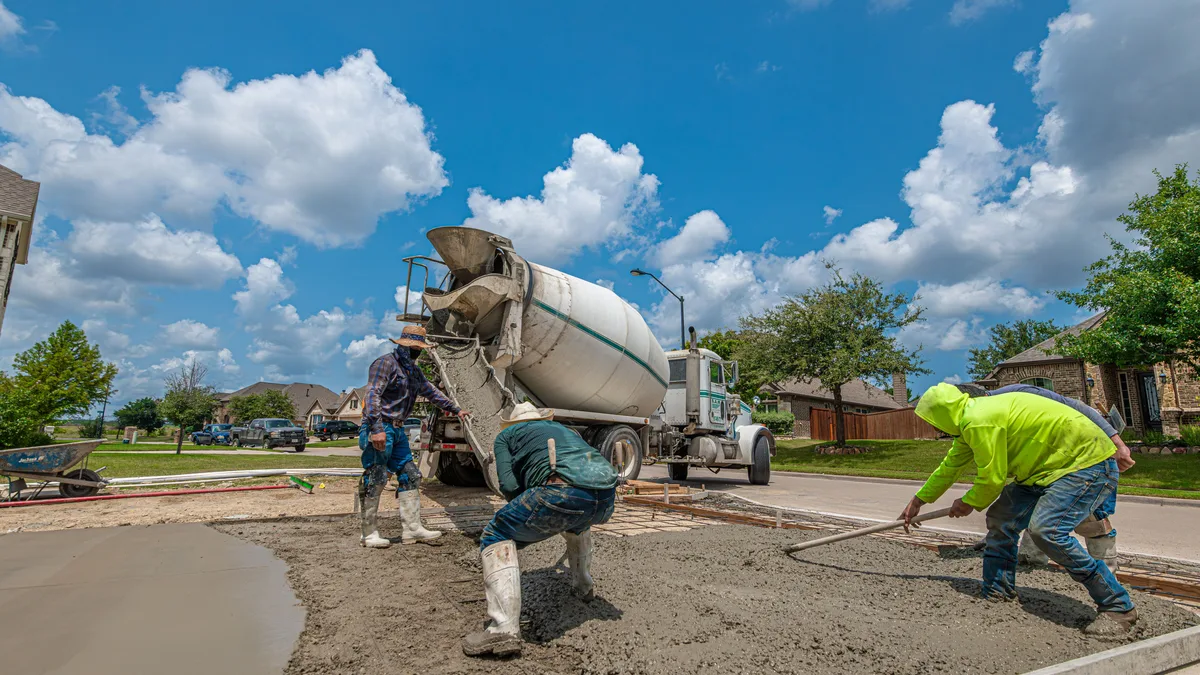
Two permits, two offices, one driveway
A residential driveway in Washoe County crosses an invisible line. On your side of it — the property line, usually a few feet behind the back edge of the sidewalk — the work is reviewed, if at all, as a building permit by the building department, filed through the shared regional portal at onenv.us. On the public side of it — the driveway approach between the sidewalk and the street, the curb cut, the gutter, and the sidewalk panels themselves — the work is in the public right-of-way, and that is governed by a separate encroachment, excavation, or right-of-way permit issued by public works or engineering.
The City of Reno's Public Works page puts it plainly: Reno Municipal Code sections 6.11 and 12.08 require "any person performing work within the City of Reno right-of-way to first obtain an encroachment and/or excavation permit." Washoe County's Engineering and Capital Projects Division says the same of its Encroachment/Excavation permit (the form it used to call a "Street Cut"): it is required for work within the Washoe County right-of-way, under Washoe County Code sections 85.058 through 85.115. Neither permit is a building permit, and a building permit does not stand in for either one.
What triggers the encroachment permit
Any of the following puts part of your driveway project in the public right-of-way and, in all three jurisdictions, into the encroachment-permit lane:
- A new driveway approach. Creating a driveway where there wasn't one means cutting the curb and building a new apron between the sidewalk and the street.
- Widening an existing approach. A single-car driveway turned into a double, or a flare added for a trailer, lengthens the curb cut and usually replaces the apron.
- Relocating or closing an approach. Moving the driveway and restoring the old curb and sidewalk is right-of-way work on both ends.
- Replacing a sidewalk or curb panel. Even if the driveway itself is a like-for-like replacement, tearing out and re-pouring the sidewalk section it crosses is work in the right-of-way.
- Trenching or drainage into the street. Running a drain line through the curb face or opening the street for any reason is excavation in the right-of-way.
- A dumpster or storage container on the street. In Reno, Municipal Code section 6.11 also requires a temporary encroachment permit for dumpsters and mobile storage containers placed in the right-of-way — worth knowing if the demolition haul-off box is going to sit at the curb rather than on your driveway.
What does not trigger it: anything that stays on your own lot. A driveway that is only being resurfaced or replaced slab-for-slab behind the sidewalk, a patio, a walkway, a garage slab, or a backyard pad never touches the right-of-way and never needs an encroachment permit. Those may still need a building permit — covered below.
Who issues it, jurisdiction by jurisdiction
Reno and Sparks each own the streets inside their city limits; Washoe County owns the streets in the unincorporated areas (Spanish Springs, Sun Valley, Washoe Valley, Cold Springs, and the like). The permit comes from whichever one owns the road in front of your house — not from the building department, and not from the regional portal's building-permit queue.
City of Reno — Public Works
Reno's encroachment and excavation permits are handled by the City of Reno Public Works permit staff, reached at [email protected] or 775-334-2548, and documented on the City's own Encroachment-Excavation Permits page. The City encourages applying by email; staff reply with the permit number, the total fees, and instructions for paying online through the Accela ONE portal. Applications can also be submitted and paid in person at City Hall, 1 E. 1st Street. The page states that only a licensed, bonded, and insured contractor — or that contractor's authorized agent — may obtain the permit, that the contractor must have an excavation bond and the required insurance on file, and that stormwater best-management practices must be in place before construction starts. As of this writing the page gives a processing range of about three business days for smaller projects to three to five weeks for larger ones, with the clock depending on a complete application and an accepted bond and insurance. The City's construction standard details, linked from its building permits page, govern how the approach, curb, and sidewalk must actually be built.
City of Sparks — Engineering Services
Sparks keeps its engineering and right-of-way forms on the Engineering Services forms page, and its Community Services permit-fee brochure (revised January 9, 2026) lists "Street Cut/Right-of-Way Use Permits" among the additional permits a project may need beyond the building permit — and notes elsewhere that a separate right-of-way permit must be obtained by a licensed and bonded contractor. Sparks publishes fewer plain-language specifics online than Reno or the County, so for a Sparks address treat the trigger list above as the rule and have your contractor confirm the current submittal with Engineering Services before scheduling the pour.
Washoe County — Engineering and Capital Projects
In unincorporated Washoe County the permit is the Encroachment/Excavation (EE) permit from the Community Services Department's Engineering and Capital Projects Division, described on the County's Encroachment, Excavation, and Revocable Occupancy Permits page. The County says the permit may be obtained by a utility company or a contractor licensed, bonded, and insured to do work in Nevada, requires an excavation performance bond, and is governed by Washoe County Code sections 85.058 through 85.115. A separate Revocable Occupancy Permit (sections 85.056 and 85.057) covers any permanent obstacle or encroachment left in the right-of-way of a county road. Submittals go through the regional onenv.us portal, and if the property sits inside an active homeowners' association, the County requires written HOA approval with the submittal. Questions go to 311 (775-328-2003) or the Engineering office at 1001 E. Ninth Street, Reno.
State highways — NDOT
If your frontage is on a state-maintained route rather than a city or county street, the right-of-way belongs to the Nevada Department of Transportation. NDOT's right-of-way occupancy permits page states that work in NDOT right-of-way requires an encroachment permit and an NDOT-approved traffic control plan, applied for through the local NDOT administrative office (Reno is one of five), and that no use of a state roadway is authorized until that permit has been processed and approved. It is rare for a residential driveway, but it happens along older highway frontages, and it is worth a one-minute check of who owns the road.
Why the contractor pulls it — and what that means for your bid
Both Reno and Washoe County restrict the encroachment permit to a licensed, bonded, and insured contractor, so this is not a permit you pull yourself and hand to whoever shows up with a saw. Hiring an NSCB-licensed C-5 contractor for your driveway pour or widening in Reno and Sparks is what makes the permit possible in the first place, because the applicant has to carry the excavation bond and insurance the city or county requires. Practically, that changes three things about the job:
- The bid should name it. Ask every bidder whether the quote includes the encroachment permit, the bond, and any required traffic control for the approach, or whether those are billed separately. A bid that is silent on the right-of-way portion is either excluding it or hoping nobody asks.
- The schedule depends on it. Reno's own page puts smaller permits at a few business days and larger ones at several weeks. A contractor who wants to start Monday on a driveway that needs a new curb cut either already has the permit or doesn't have one.
- The inspection is separate. Right-of-way work is inspected by the issuing engineering or public-works office, apart from any building inspection on the lot side. The approach has to be built to the jurisdiction's construction standard details, which is one more reason a like-for-like "just match what was there" approach can still get flagged.
If the existing approach is sound and only the driveway behind the sidewalk is failing, there may be no right-of-way work at all — which is where concrete crack repair, resurfacing, and partial replacement can keep a project entirely on your side of the line and out of the encroachment process.
Interior-lot flatwork: the lighter threshold
Flatwork that never leaves your property is judged under building-permit rules, and those rules carve out some ground-level work. Washoe County's "What Requires a Permit" page and its Work Exempt from Building Permits handout (citing Washoe County Code 100.105.2) list "patios, sidewalks and driveways not more than 30 inches (762 mm) above adjacent lowest grade, without foundations, and not over any septic system, basement or story below, and not part of an accessible route" as exempt from a building permit. The same handout exempts retaining or rockery walls not over 48 inches measured from adjacent grade that support no surcharge, and grading under 50 cubic yards — both of which come up when a driveway or backyard patio and flatwork pour is cut into a slope.
The City of Reno's building permits page does not publish its own list; it points to the residential code's exempt-work section (IRC R105.2) for one- and two-family homes and to IBC 105.2 for everything else, and it says plans are accepted only under the 2024 code editions as of January 1, 2026. Confirm the specific exemption for a Reno address with Permit Services at 775-334-2063 rather than assuming the County's wording applies. We could not read a Sparks-published exemption list at the time of writing, so for Sparks ask the Community Services permit counter at 431 Prater Way.
Three cautions that apply even when the flatwork itself is exempt. First, the County's handout is explicit that an exemption does not authorize work that violates any other law or ordinance — zoning setbacks, drainage rules, and HOA covenants still apply. Second, "exempt from a building permit" says nothing about the right-of-way; the approach still needs its encroachment permit. Third, a driveway over a septic tank or leach field is specifically not exempt, which matters on the larger unincorporated lots where septic is common.
What we deliberately don't publish
No fee amounts, no bond amounts, and no inspection fees. Reno's page says total fees are quoted by email after review; Washoe County's page lists none; Sparks' brochure lists the permit by name only. Those figures change, and a stale number on a page like this one would be worse than no number. Ask the issuing office or have your contractor itemize it. What a driveway itself should cost in Reno and Sparks — per square foot, with sources — is on our concrete cost and pricing hub, and how to check that the bidder is actually licensed to pull the permit is on the Nevada license verification walkthrough.
Frequently asked questions
Do I need a permit to widen my driveway in Reno or Sparks?
Usually two different approvals are in play. Any part of the work that touches the public right-of-way — the driveway approach between the sidewalk and the street, a new or wider curb cut, or a sidewalk panel that gets replaced — needs an encroachment or right-of-way permit from the city or county engineering/public works side. The part on your own lot may or may not need a building permit; Washoe County lists ground-level driveways, sidewalks, and patios without foundations as exempt, and the City of Reno defers to the residential code’s own exemption list. Your contractor confirms both before the first saw cut.
What is the difference between an encroachment permit and a building permit?
A building permit covers construction on your property and is reviewed by the building department. An encroachment (or right-of-way / street-cut) permit covers any work in the public street, curb, gutter, or sidewalk, and is issued by the public works or engineering side of the same jurisdiction — Reno Public Works, Sparks Engineering Services, or Washoe County’s Engineering and Capital Projects Division. They are separate permits, reviewed by different staff, and one does not stand in for the other.
Can a homeowner pull a Reno encroachment permit themselves?
Not in Reno or unincorporated Washoe County. The City of Reno’s Public Works page says only a licensed, bonded, and insured contractor — or that contractor’s authorized agent — may obtain an encroachment or excavation permit, and Washoe County’s Engineering page says the same of its Encroachment/Excavation permit. That is why the driveway contractor, not the homeowner, is the one who applies.
Does a patio or backyard slab need an encroachment permit?
No. An encroachment permit is only about the public right-of-way. A patio, walkway, or slab that sits entirely inside your property line never touches the street, so it never triggers one. It may still need a building permit depending on height above grade and whether it has a foundation — Washoe County’s exempt-work list treats patios, sidewalks, and driveways not more than 30 inches above adjacent grade, without foundations, and not over a septic system or basement as exempt. Confirm with your jurisdiction and your HOA before pouring.
What if my street is a state highway?
Then the right-of-way belongs to the Nevada Department of Transportation, not the city or county, and work in it requires an NDOT encroachment permit with an NDOT-approved traffic control plan, applied for through the NDOT district office in Reno. Ask your contractor to confirm who owns the road in front of your house before anyone assumes the local permit is enough.
How much does a driveway encroachment permit cost in Reno?
We don’t publish a figure. Reno’s Public Works page says staff reply by email with the permit number and total fees after reviewing the application, and Washoe County’s page lists no amounts either. Fees and bond requirements change, and quoting a stale number would be worse than none — ask the issuing office or have your contractor include the permit line item in the bid.
Get a quote that includes the permit
Tell us whether the driveway is new, widened, or a replacement, and whether it touches the sidewalk or curb, and we will match you with an independent, NSCB-licensed C-5 contractor in Reno or Sparks who can pull the encroachment permit and quote the approach and the driveway together. Free, no obligation.
Get Free Driveway Quotes →